How to Truly Remember What You Read
About Building Mental Models
Published
Feb 4, 2026
Topic
Psychology
How to Truly Remember What You Read: It’s Not About Memorizing — It’s About Building Mental Models
Most of us do the following when reading books or articles:
highlight important parts with colorful markers
write notes in the margins like “important”, “remember”, “re-read later”
sometimes even copy whole pages or paragraphs
The result? A few weeks later, almost nothing remains from that book in our memory. Why does so much effort lead to so little retention?
The Core Problem: Passive Reading and Surface-Level Notes
The human brain does not store information passively. It only keeps what it considers important, useful, and well-connected to existing knowledge.
If new information arrives with no meaningful connection to anything you already know, your brain tags it as “low priority” and quickly discards it. This is an evolutionarily smart mechanism.
That’s why classic techniques like endless highlighting, re-reading, underlining, and copying are surprisingly ineffective. They create the illusion of work, but very little real learning happens.
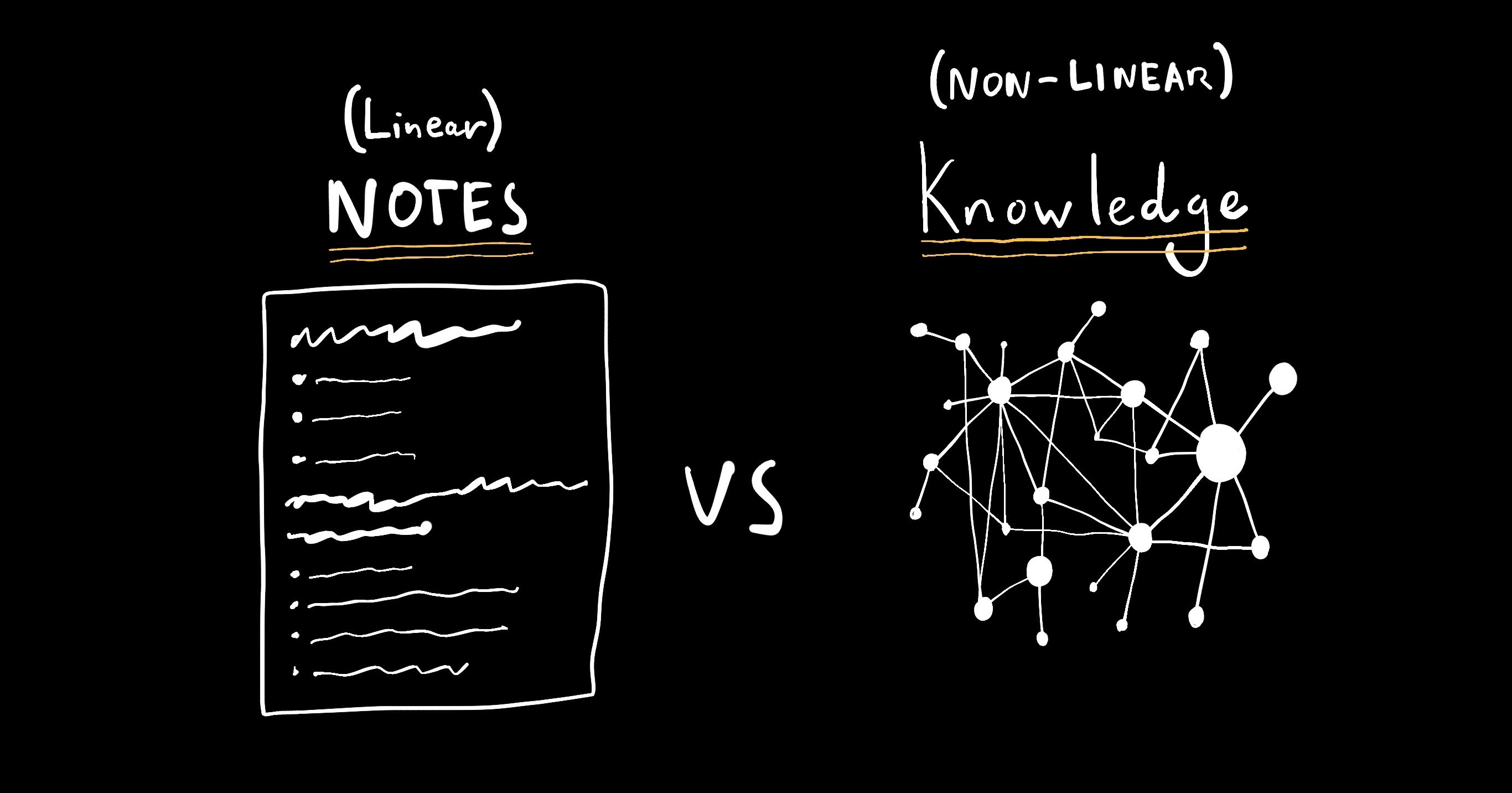
Real knowledge looks like a spider web
Genuine, long-lasting knowledge in the brain is not isolated facts. It is a dense, interconnected network of concepts where:
every new piece of information hooks onto existing nodes
the more connections a concept has, the longer it stays and the easier it is to use
the network keeps growing and becoming stronger over time
The denser and more interconnected this web becomes, the more durable and usable your knowledge is.
Key Ideas — Expanded
Interest is the strongest memory glue When you are genuinely curious about a topic, your brain automatically signals: “This matters.” Deep processing begins automatically. Without interest, even the best techniques usually fail.
Every reading session should be: predict → test → update Good readers don’t read passively. They constantly ask:
What will the author say next?
How does this connect to the previous chapter?
What would happen if this idea were wrong? Make a prediction → read → see if you were right or wrong → update your mental model.
Being wrong is actually very powerful (hypercorrection effect) When you make an incorrect prediction and then discover the mistake, your brain encodes that corrected information much more strongly. Making mistakes while actively thinking is far more valuable than passively absorbing correct information.
Explaining out loud is the ultimate test and reinforcer (Feynman Technique)
Close the book
Explain the main ideas as if teaching an intelligent 10–12-year-old
Wherever you get stuck or become vague — that’s exactly where your understanding is weak
Notes should be kept to an absolute minimum The best note is the one you never had to write. Real work happens in your head, not on paper. If you do write notes, they should be:
only for things you truly don’t understand yet or find surprising
in your own words
very short
written as future questions to yourself
Pre-learning (advance organizing) saves huge amounts of time Before deep reading:
skim the table of contents
look at all chapter titles and subheadings
read the introduction and conclusion → Your brain already builds a rough frame → new information lands much faster and sticks better.
Spaced repetition — only for the golden 5–15% You don’t need to review everything. Identify the handful of core concepts / mental models that are truly foundational for you — and strengthen only those with spaced repetition.
Practical Workflow (Simple Version)
Choose a book or topic
Spend 10–15 minutes building a rough mental map (pre-learning)
Start reading actively
Every 10–20 minutes:
close the book
ask yourself: “What have I understood so far?”
verbally (or in your head) reconstruct the model you’ve built
When you find a mistake or confusion — great! That’s a high-value learning moment. Dig deeper there.
At the end of a chapter: write 2–4 sentences in your own words summarizing the core idea/model
Over the next few days: explain that model out loud again at least once
Final Thought: What’s the Real Goal?
The goal of reading is not to finish more books. The goal is to continuously upgrade:
the way you see the world
the way you think
the way you approach problems
If after one year of reading you end up with just 7–12 deep, interconnected mental models that actually changed how you think — that is worth far more than reading 100 books shallowly.
Real knowledge is a living, growing, densely connected web inside your mind.
Build that web well — and what you read will actually change you.
source